*Warning this review contains spoilers*
What a lovely and sad movie!
What’s it about? Raymond Briggs was a famed author and illustrator who died on August 9, 2022. Prior to his death, he often thought his parents lives weren’t anything special, but he loved them dearly and wanted to share his memories of them to the world. The graphic novel and animated movie are a homage to their lives and depicts what life was like for them as British people during the early years of the 20th century until their death in the 1970s.
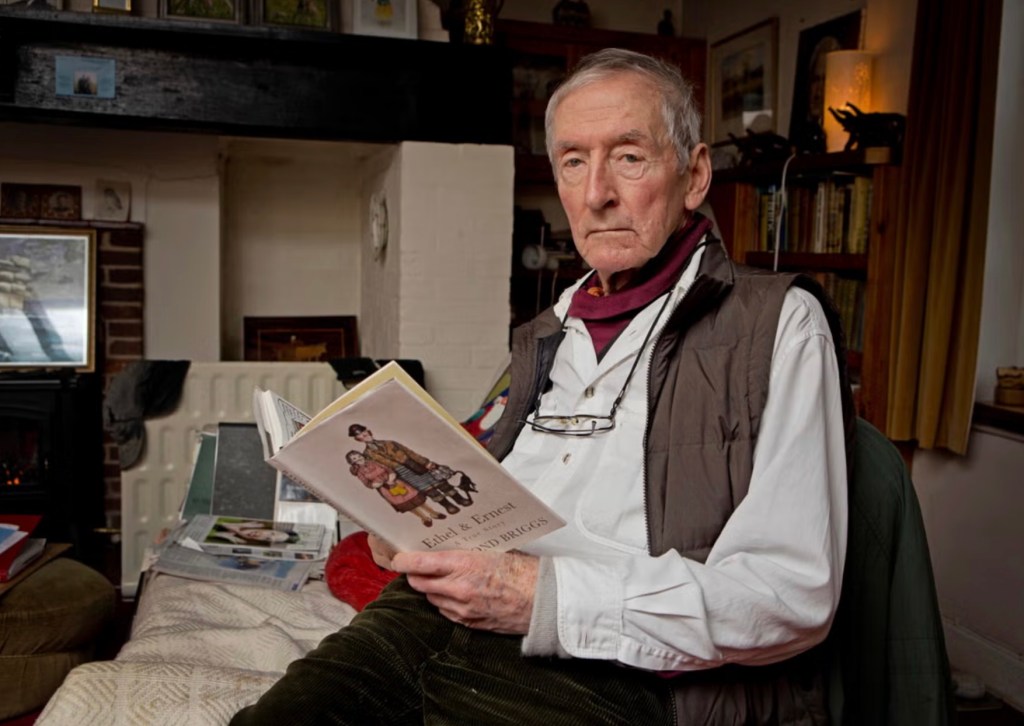
I was doom scrolling through my tiktok account and suddenly I started seeing clips about the movie Ethel & Ernest. It intrigued me enough that it made me want to watch it and then it suddenly clicked for me on where I heard Raymond Briggs’s name before. The Skwigly podcast had covered Raymond’s work before and it was honestly nice to finally to check him out. The first few minutes of the movie were primarily live action scenes of elderly Raymond showing the audience around his cottage home and workspace while reflecting on his life and his parents’ lives. Those scenes did a wonderful job establishing the importance of memories and who will be left to remember our loved ones once immediate family members are gone.

By all accounts, Ethel and Ernest were ordinary people, but what makes their story fascinating is that they offered a window to what life was like for British people during the early years of the 20th century. The transition from modern live action to the animated slum areas of 1928 London was smooth and made me feel like I was transported into a picture book. Despite the soft colors used in the film, it doesn’t shy away from the difficult realities that most middle/working class British folks had to live through. The very first scene in Ernest’s neighborhood are workers preparing their horses for the daily tasks ahead of them while the horses poop everywhere. It’s in the middle of that chaos, that we are introduced to Ernest casually getting ready to start the day by easily getting around the mess on his bicycle.
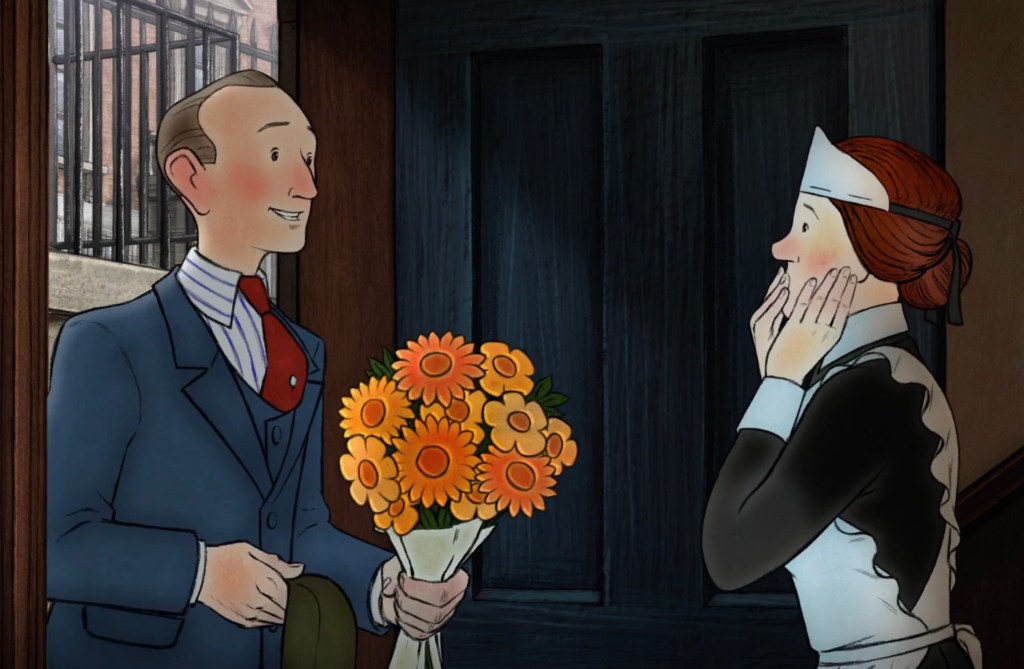
That entire scene sets up the kind of environment Ernest grew up in and helps us understand why he was more sensitive about the struggles of working class people. In contrast, Ethel worked as a lady’s maid in a upper class neighborhood and internalized high class values all throughout her life. Despite their political differences, it didn’t stop them from falling in love with each other and their relationship was, surprisingly, extremely adorable. Normally, political differences would be a deal breaker in most relationships, but the reason I think that Ernest and Ethel’s relationship worked is solely because aside from working class struggles; other forms of oppression simply didn’t effect them. Sure, they talked about it and it’s clear that Ernest often wished he could’ve had deeper conversations with Ethel, but otherwise they mostly worried about building a comfortable life together.
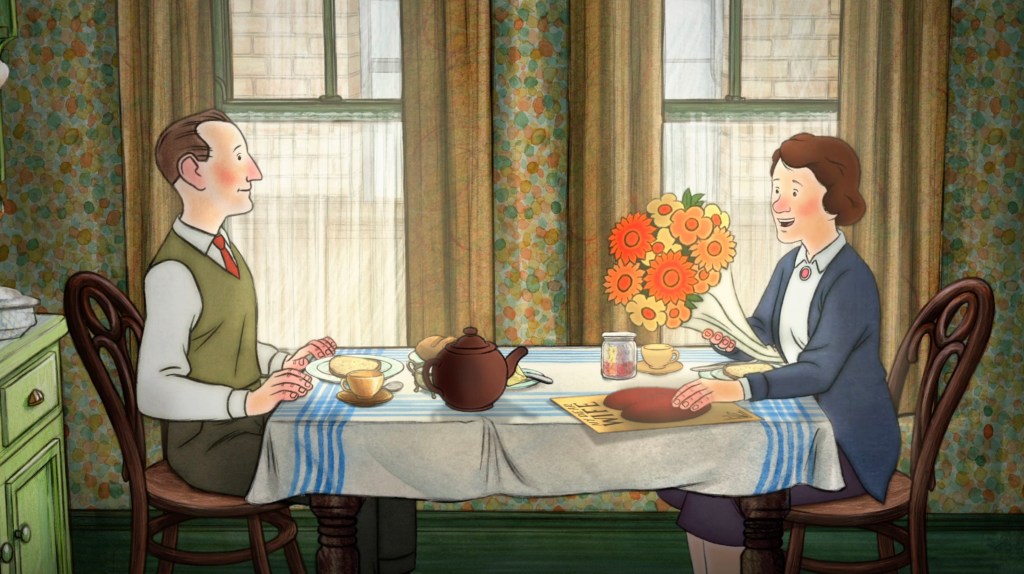
I can understand if viewers have a hard time with Ethel’s character because while she’s an extremely loving character, it’s also unpleasant to see her put down Ernest whenever he sings cockney songs or just otherwise exudes a snobby attitude towards anyone around her. Despite her flaws, Ernest geniunely loved her and any scene where he shows his immense patience and gentleness with her is a such a treat. In my opinion, Ernest was my favorite character simply because he was such a happy fellow and while life was never easy for him, he worked hard to provide for his family so that they never had to suffer. Any time, that Ernest built or bought something for the house made me feel a sense of accomplishment along with them.
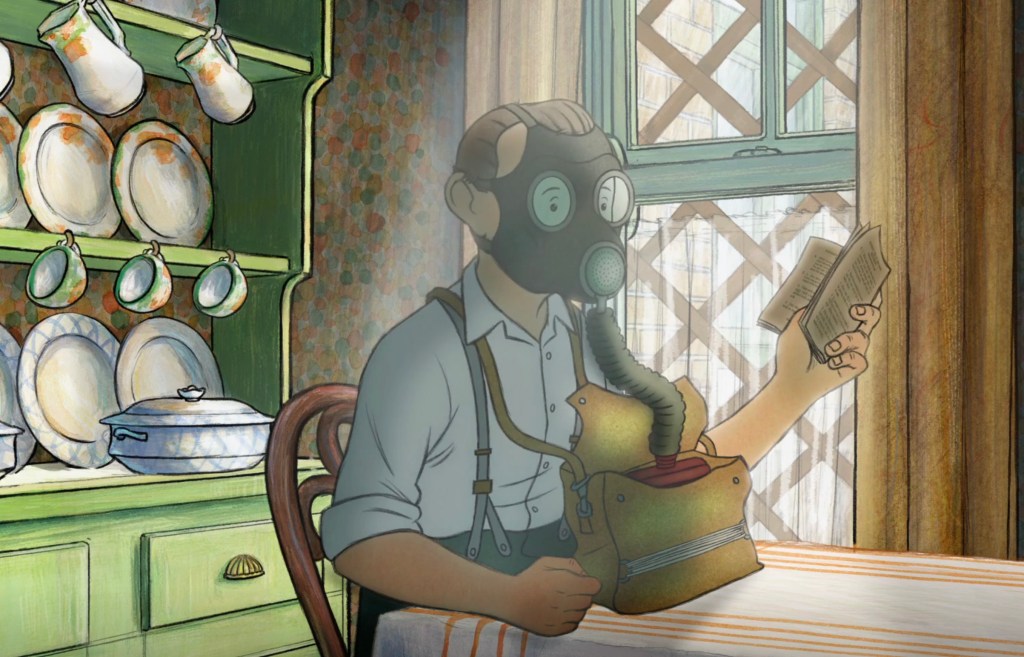
The home that they built together was so full of warmth and love that it almost felt criminal when real world events distrubed their peace. It’s a testament to Raymond’s writing to how seamlessly he was able to integrate the horror of wartime realities to the daily lives of regular British citizens. Both Ernest and Ethel lost loved ones during World War I, which made them very worried about the impending war with Hitler’s Germany. However, for the sake of maintaining some sense of normalcy in their lives, they began incorporating safety measures such as boarding up their windows and buying gas masks, all while still maintaining a cozy atmosphere for the sake of their son.
Admittedly, I don’t know enough about the history on how British citizens endured the constant German bombing that would later be known as “The Blitz”, but scenes of planes flying over cities, Ernest and Ethel hiding in their homemade shelter and Ernest volunteering as a fireman paints a very harrowing and terrifying picture. Even someone as jolly as Ernest eventually broke down from the trauma of having to move dead bodies to the ship docks. This is where the movie displayed Ethel’s most endearing moment with Ernest, she allowed him to cry and be vulnerable in her presence. It’s such a beautiful scene since unfortunately, we live in a patriarchal world that enforces toxic views about masculinity so for Ernest to be allowed to show his vulnerability and openly cry out his feelings moved me to tears.
Once the war ended, it wasn’t difficult for Ernest and Ethel to resume their comfortable lives, but the movie does acknowledge that not everyone in their neighborhood were able to pick up where they left off since they lost loved ones during the war. That’s why Ernest and Ethel always made sure to enjoy every moment they had with each other because they knew how fleeting life could be. It isn’t lost on me that there are moments that both Ernest and Ethel often lamented that their economic reality limited them on enjoying certain things such as going to popular dance halls or going to fancy tea rooms. Despite their financial limitations they always found a way to enjoy themselves and provide a happy home for Raymond. The rest of the movie is simply Ernest and Ethel enjoying the rest of their lives together and Ernest making sure he keeps up with the times, such as buying a car, so that he can spend time with Ethel either in the city or the countryside. Any other movie probably would’ve ended with them sitting under a tree enjoying their old age, but it doesn’t stop there.

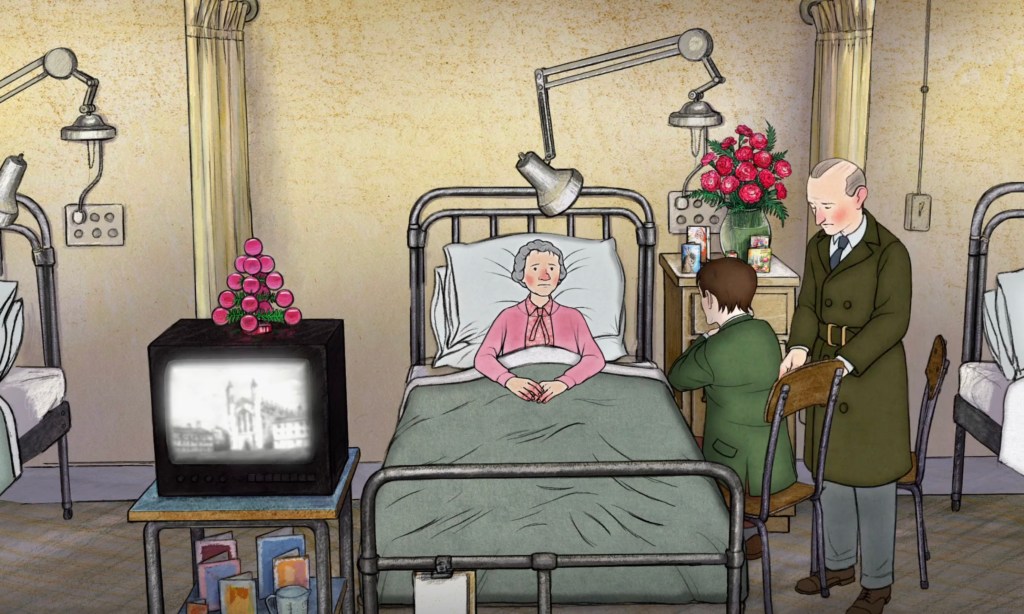
The movie depicts the hardship of growing older such as Ethel slowly losing her memories of her friends and family, much to Ernest’s despair. It’s rare for movies to show what the bodies of elderly people look like as they are passing away and honestly it broke my heart to see the formerly lively Ernest and Ethel in such a depressing state. It’s a grim reminder that someday our bodies will slow down and change into something unrecognizable. What’s even worst than watching your loved ones die of old age is having to manage their estate and deal with every precious item and memory they left behind.
Throughout the entire movie, we celebrated along with Ernest and Ethel, whenever they purchased or obtained anything to build up their new home so when Raymond decided to donate everything (except the family pictures) to charity, it felt like a knife went through my heart. Logically, it’s understandable why he would keep items he doesn’t necessarily need, but it still hurt to see the space that Ernest and Ethel built together be emptied out. In the end aside from pictures and valuable items, all that’s truly left about our existence are memories.
In recent years there’s more conversation on social media about the challenges of raising children and the obvious financial and emotional labor that goes into it. It’s no secret that women are often the ones that deal with the the brunt of that labor, which has led to a rise of heartfelt testimonies about brutal realities of motherhood. That’s why more people are choosing not to have children anymore and usually the push back arguments against that choice is “who is going to carry on your legacy?”. That question is very insulting because it implies that there aren’t other ways our ancestors and by extension ourselves can be remembered without having children. It discounts the value of other important relationships such as extended family and friends whom all play an important part of building a community and passing on our legacies.
It also dismisses the usage of art, media production and animation to preserve memories of our loved ones. Raymond Briggs didn’t have children of his own, but he used his artistic abilities to bring his parents to life for a larger audience so that they can be remembered. That’s why I want to send my immense gratitude to Raymond Briggs for sharing his parents with the world and I hope he knows that the film was a wonderful tribute to them — including himself. It’s thanks to him that whenever I think about Ethel and Ernest, I can’t help, but feel that their names have such a nice ring to it — almost like they belong together.

It’s truly a tragedy that we lost someone like Raymond Briggs whose work explored themes such as classism, complex familial relationships, the tragedies of war and grief in such a smooth and gentle manner. He’s also quick to remind us that it’s ok to sit with your nostalgic memories of your loved ones because it reminds us they did exist and that as long as we remember them; and find ways to tell their stories then they will always be remembered.
Thank you Raymond Briggs and rest in power.

 Home to my Bitter Thoughts